
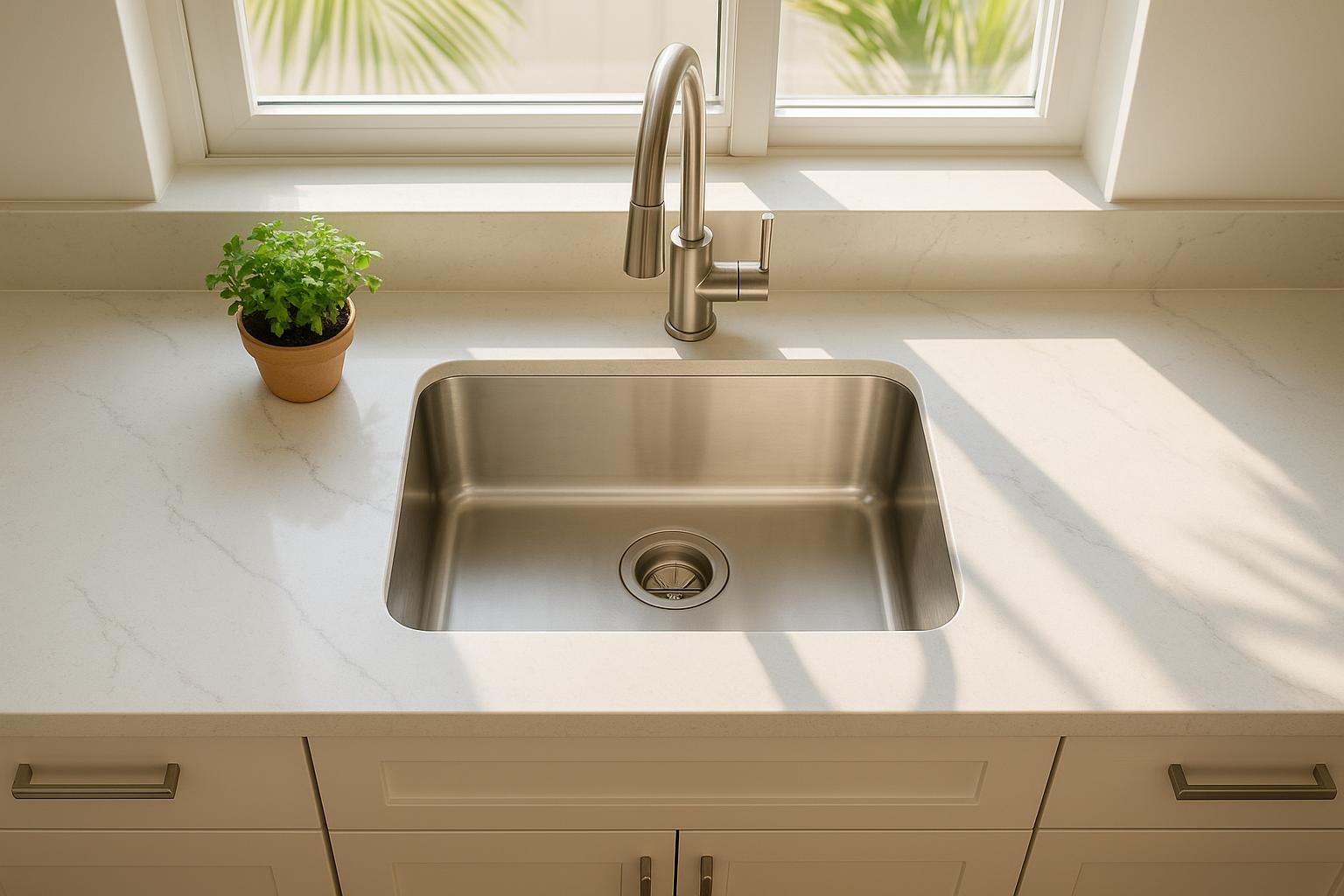
Why Your Countertop Choice Matters More Than You Think
When homeowners in Coral Springs start planning a kitchen or bathroom remodel, the countertop decision often gets treated as a quick afterthought — something you pick based on color and call it a day. But your countertops are one of the hardest-working surfaces in your home. They take the heat from pots and pans, absorb the impact of daily meal prep, resist water around sinks, and set the visual tone for the entire room.
Choosing the wrong material can mean premature staining, cracking, or a look that clashes with the rest of your renovation. Choosing the right one means a surface that performs beautifully for decades. Here's what you need to know before you commit.
The Most Popular Countertop Materials (and What They're Really Like)
Walk into any showroom in South Florida and you'll see dozens of options. Let's break down the materials that Coral Springs homeowners ask about most often.
Quartz
Quartz countertops are engineered from natural stone and resin, creating a surface that's extremely durable and virtually maintenance-free. Unlike natural stone, quartz doesn't need to be sealed. It resists stains, scratches, and bacteria, making it an excellent choice for busy kitchens and family bathrooms.
The tradeoff? Quartz can be damaged by excessive heat, so you'll want to use trivets. It also tends to sit at a mid-to-high price point, though many homeowners find the low maintenance costs make it worthwhile over time.
Granite
Granite has been a go-to countertop material for years, and for good reason. Each slab is unique, offering natural patterns and depth that engineered materials can't perfectly replicate. It's heat-resistant, hard, and when properly sealed, holds up well against stains.
The key word there is properly sealed. Granite requires periodic resealing — typically once a year — to maintain its stain resistance. If you're someone who prefers a set-it-and-forget-it surface, this is worth considering before you choose granite.
Marble
Marble is stunning. There's no getting around that. The veining, the luminous surface, the timeless elegance — it's the material people picture when they imagine a luxury bathroom or a showpiece kitchen island.
But marble is also porous and softer than granite or quartz. It stains more easily, etches from acidic substances like lemon juice or vinegar, and requires diligent sealing and care. For a low-traffic powder room or a bathroom vanity, marble can be a gorgeous choice. For a kitchen where you cook every night, it demands a level of maintenance that not every homeowner wants to take on.
Butcher Block
Butcher block countertops bring warmth and a natural feel that pairs well with modern farmhouse and transitional kitchen designs. They're relatively affordable and can be sanded and refinished when they show wear.
However, wood and water aren't natural friends. In a humid climate like ours here in Coral Springs, butcher block around sinks or dishwashers needs careful sealing and attention. Many homeowners use butcher block on an island or prep area while choosing a more water-resistant material for perimeter countertops.
Solid Surface (Corian and Similar)
Solid surface countertops offer seamless installation with no visible joints, which gives a clean, uniform look. Minor scratches and burns can often be buffed out, and the material is non-porous, so it resists mold and mildew well.
The downside is that solid surface doesn't have the same visual depth as natural stone or high-end quartz. It can also be scratched or damaged by hot cookware more easily than harder materials. That said, for bathroom vanities and laundry rooms, it's a practical and budget-friendly option.
Five Questions to Ask Before You Choose
Material specs only tell part of the story. Before you finalize your countertop selection, work through these questions:
- How do you actually use this space? A kitchen where you cook daily has very different demands than a guest bathroom. Be honest about your habits — not your aspirations.
- What's your maintenance tolerance? Some homeowners don't mind annual sealing and careful cleaning. Others want to wipe down a surface and never think about it again. Neither preference is wrong, but it should guide your choice.
- What's the overall design direction? Your countertops need to work with your cabinetry, backsplash, flooring, and paint colors. Bringing samples home and viewing them in your actual lighting is far more reliable than choosing under showroom lights.
- What's your realistic budget? Countertop costs vary widely — not just by material, but by edge profile, thickness, cutouts for sinks and cooktops, and installation complexity. Get a detailed estimate that includes fabrication and installation, not just the per-square-foot material cost.
- Are you planning to sell soon? If resale value is a factor, quartz and granite consistently perform well with buyers in the South Florida market. More niche materials may appeal to your personal taste but won't always deliver the same return.
Don't Forget About Edge Profiles and Thickness
This is where many first-time remodelers get surprised. The edge profile — the shape of the countertop's front edge — affects both the look and the cost of your installation. A simple eased edge is clean and affordable. A waterfall edge or ogee profile adds elegance but also adds to the fabrication price.
Similarly, countertop thickness matters. A standard three-centimeter slab looks substantial and modern. Thinner slabs can reduce cost but may require additional support or buildup strips, which affect the final appearance.
These details are worth discussing with your remodeling team early in the design phase so there are no surprises when the final quote comes in.
Why Seeing Samples in Your Home Matters
We can't stress this enough: countertop materials look different under showroom lighting than they do in your kitchen. The natural light in a Coral Springs home, the color of your existing flooring, the tone of your cabinets — all of these affect how a countertop sample reads in the actual space.
Before you sign off on a material, bring samples home. Set them on your existing counters or hold them next to your cabinet doors. Look at them in the morning and again in the evening. A surface you'll live with for 15 to 20 years deserves more than a five-minute decision under fluorescent lights.
Getting the Right Guidance Makes All the Difference
At Ponderosa Home Renovation, we help homeowners across Coral Springs, Parkland, Coconut Creek, and the surrounding communities navigate these decisions every day. We know which materials hold up best in South Florida's climate, which options deliver the best value for different budgets, and how to coordinate your countertop selection with the rest of your remodel so everything comes together seamlessly.
If you're planning a kitchen or bathroom renovation and want expert guidance on choosing the right countertops, reach out to our team. We're happy to walk you through your options and help you make a choice you'll love for years to come.