
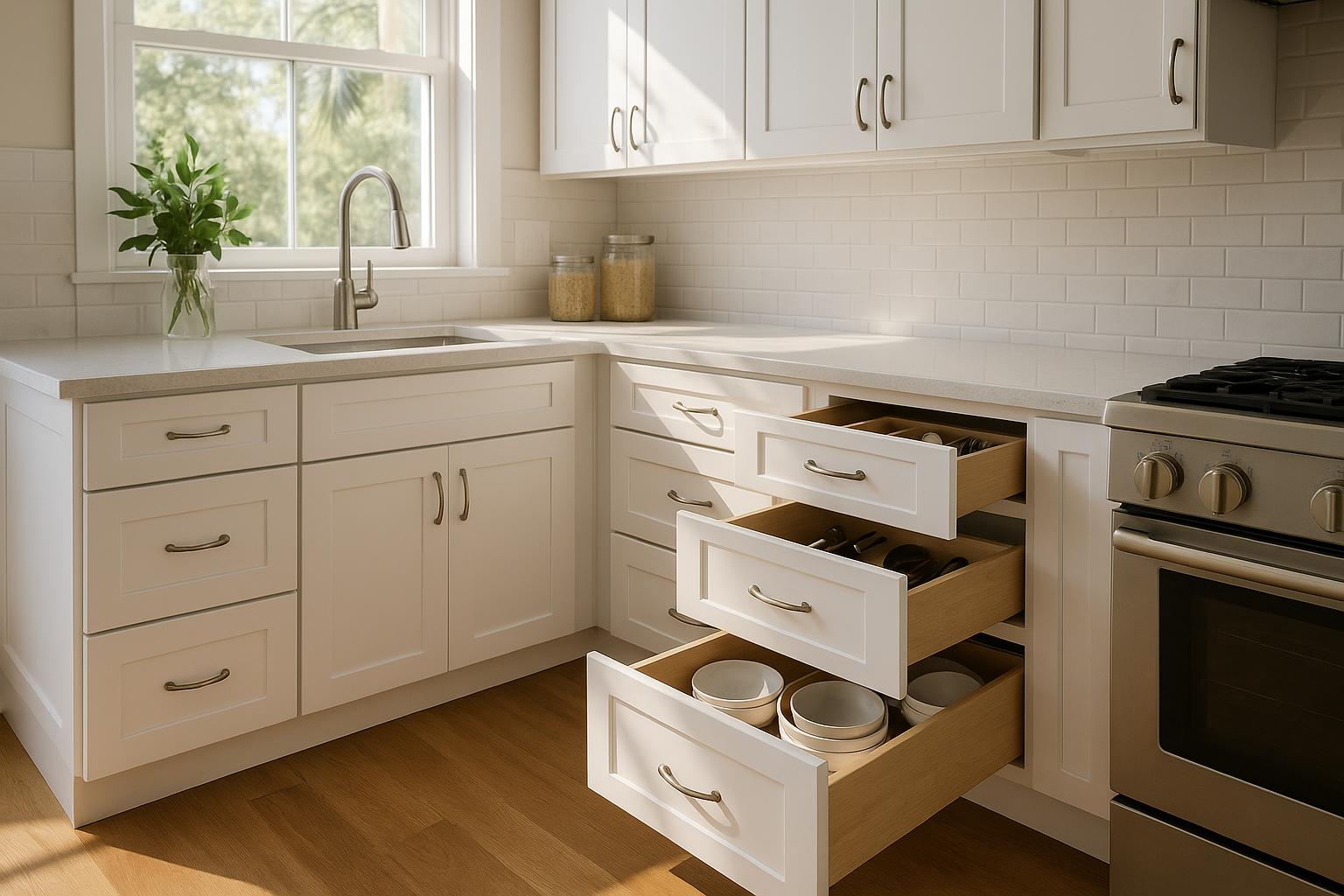
The Cabinet Question Every Homeowner Faces
Your kitchen cabinets do more than store dishes and spices — they define the look, feel, and functionality of the most-used room in your home. So when they start showing their age, the natural question is: can I get away with refacing them, or do they need to be fully replaced?
It's a question we hear all the time from homeowners in Coral Springs and the surrounding South Florida communities. And the answer isn't always straightforward. Refacing can save money when the underlying structure is solid, but in many cases, it's a band-aid on a bigger problem. Here's how to tell the difference — and make the right investment for your home.
What's the Difference Between Refacing and Replacing?
Before we get into the warning signs, let's clarify what each option actually involves:
- Refacing means keeping the existing cabinet boxes in place and updating the doors, drawer fronts, and exterior veneer. The layout stays the same, and the internal structure isn't touched.
- Replacing means removing the old cabinets entirely and installing new ones. This gives you the opportunity to change the layout, upgrade materials, and improve storage from the ground up.
Refacing is typically less expensive upfront, which is why it's so appealing. But if your cabinets have deeper issues, refacing can end up costing you more in the long run — both in repairs and in missed opportunities to improve your kitchen's functionality.
7 Signs It's Time to Replace, Not Reface
1. The Cabinet Boxes Are Warped or Water-Damaged
South Florida's humidity is tough on cabinetry, especially in kitchens where steam, splashes, and occasional plumbing leaks are part of daily life. If you notice warping, swelling, soft spots, or visible water stains on the cabinet boxes themselves — not just the doors — refacing won't fix the problem. You'd be putting a new face on a failing structure.
Pull out the contents of your under-sink cabinet and check the bottom panel carefully. That's usually the first place water damage shows up.
2. Shelves Are Sagging or Falling Apart
Open your cabinets and take a close look at the shelves. Are they bowing under the weight of everyday items? Are the shelf pins pulling out of the sidewalls? Sagging shelves are a sign that the material — often particleboard in older or builder-grade kitchens — has deteriorated beyond repair. New cabinets built with plywood or solid wood construction will hold up far better over time.
3. Drawers and Hinges Won't Stay Aligned
If you've already adjusted your hinges and drawer slides multiple times and things still won't close properly, the issue likely isn't the hardware — it's the cabinet frame. When boxes shift, warp, or lose their square shape, no amount of hinge adjustment will keep doors aligned. This is a structural problem that refacing simply can't address.
4. You Smell Mold or Mildew
A musty smell coming from inside your cabinets is a serious red flag, especially in Coral Springs where warm, moist air can accelerate mold growth. Mold can hide behind cabinet backs and underneath base cabinets where it's not visible. If cleaning doesn't eliminate the odor, the material itself may be compromised. Replacing the cabinets — and addressing any moisture issues behind them — is the safest path forward for your home and your health.
5. Your Kitchen Layout Doesn't Work for You
This is the sign most homeowners overlook. Refacing keeps your existing layout exactly as it is. So if you've been frustrated by a lack of counter space, poor workflow between the stove, sink, and refrigerator, or cabinets that are too shallow or too high to be practical, refacing won't solve any of those problems.
A full cabinet replacement lets you rethink the layout entirely — adding a pantry cabinet, incorporating pull-out organizers, adjusting upper cabinet heights, or creating space for a kitchen island. For many families, the layout improvement alone justifies the investment.
6. The Cabinets Are Decades Old and Builder-Grade
Many homes in Coral Springs, Parkland, and Coconut Creek were built during development booms that prioritized speed over premium materials. If your cabinets are original to a home built in the 1980s or 1990s, they were likely constructed with thin particleboard, basic laminate finishes, and minimal hardware. These cabinets weren't designed to last 30+ years, and at a certain point, refacing them is like putting premium tires on a car with a rusted frame.
7. You're Planning to Sell in the Next Few Years
If a home sale is on the horizon, the return on investment matters. Refaced cabinets can look nice, but savvy buyers and home inspectors will notice the difference between cosmetic updates and quality construction. New cabinetry — especially when paired with updated countertops and modern hardware — is one of the strongest selling points a kitchen can have. It signals to buyers that the renovation was done right, not just done cheaply.
What to Look for in Replacement Cabinets
If you've decided replacement is the right move, here are a few things worth prioritizing:
- Plywood construction over particleboard for durability and moisture resistance
- Soft-close hinges and drawer slides for everyday comfort and longevity
- Dovetail drawer joints as a sign of quality craftsmanship
- Adjustable shelving so your storage can adapt as your needs change
- Custom or semi-custom sizing to maximize every inch of your kitchen's footprint
At Ponderosa Home Renovation, we help homeowners choose cabinetry that fits their style, their budget, and the specific demands of South Florida living. We'll walk you through material options, finishes, and layout possibilities so you're confident in every decision before installation begins.
Don't Guess — Get a Professional Opinion
The line between refacing and replacing isn't always obvious from the outside. Sometimes cabinets that look rough on the surface are perfectly solid underneath, and sometimes beautiful-looking cabinets are hiding serious structural issues behind closed doors.
That's why we always recommend starting with an honest assessment. When we visit a home in Coral Springs or the surrounding areas, we inspect the cabinet boxes, check for moisture damage, evaluate the layout, and give you a straightforward recommendation — even if that means telling you refacing is the smarter choice.
Our goal is to help you make the decision that adds the most value to your home and your daily life. If your kitchen cabinets have been frustrating you, let's take a closer look together and figure out the best path forward.